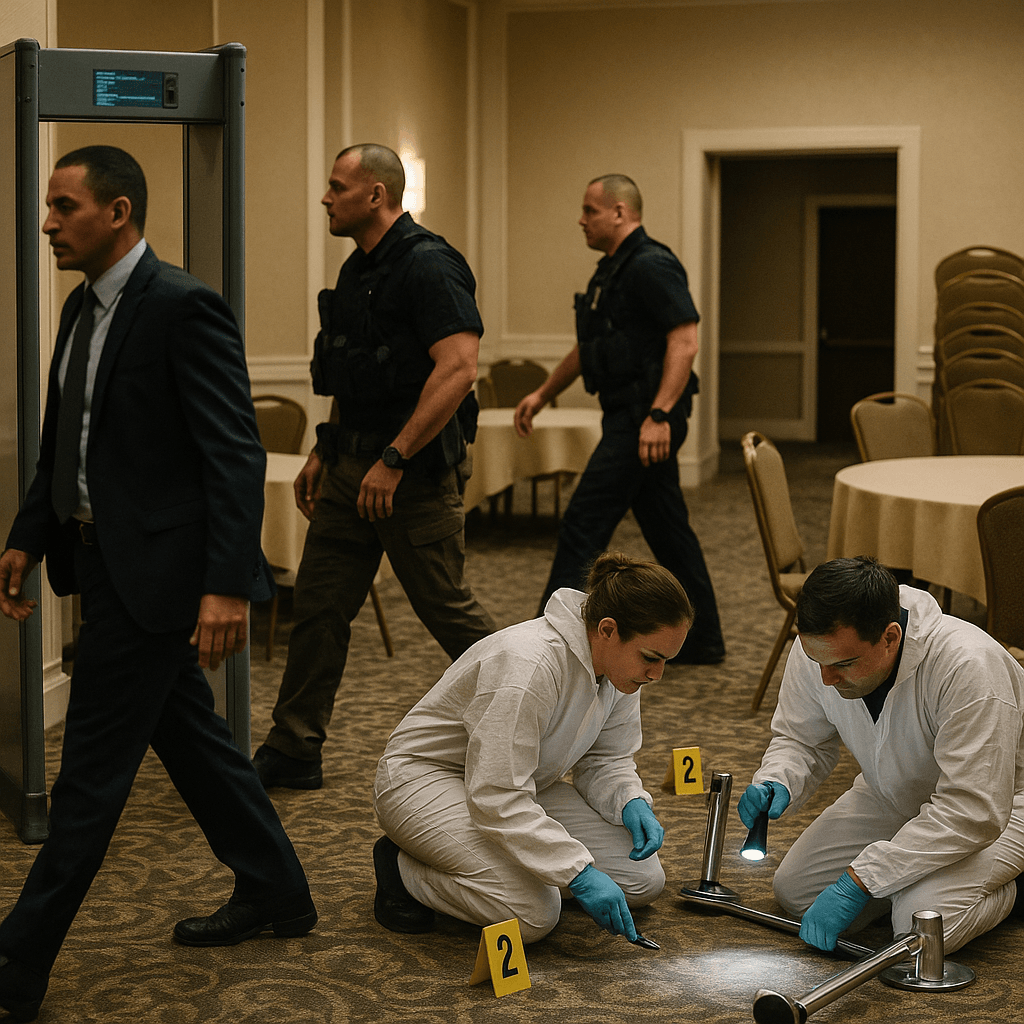
Federal prosecutors say a bullet fired by the suspect in the Trump assassination case definitively struck a Secret Service agent during the White House correspondents’ dinner in Washington. That detail raises the stakes beyond a failed attack narrative: investigators are now mapping a wider trail of violence tied to a high-security political event.
The deeper mechanism is institutional pressure. When an alleged attacker is linked to gunfire that hit a federal protection officer at a major media-political gathering, the story shifts from one individual act to a systems test. Security doctrine, threat screening, venue control, and interagency coordination all come under harsher scrutiny.

– Winner: Prosecutors arguing for a broader, more serious threat profile
– Loser: Any claim that the suspect posed only a narrowly contained risk
– What changes: Security planning around elite political and media events is likely to tighten, with more aggressive perimeter and attendee controls
Expect a faster push in the coming weeks for expanded protective reviews around campaign-linked appearances, press events, and Washington power gatherings. The likely consequence is more visible security friction at events that once relied on soft-access prestige and routine credentials.
So what does this mean for you? High-profile public events will keep feeling less open and more hardened, especially where politics, press, and celebrity overlap. If your work depends on access, travel, or live-event operations, expect longer screening, stricter movement controls, and less tolerance for uncertainty.
Subscribe for daily intelligence briefs →
—
*AI-assisted content. Reviewed by ShortBulletin Editorial Team. | shortbulletin.com*