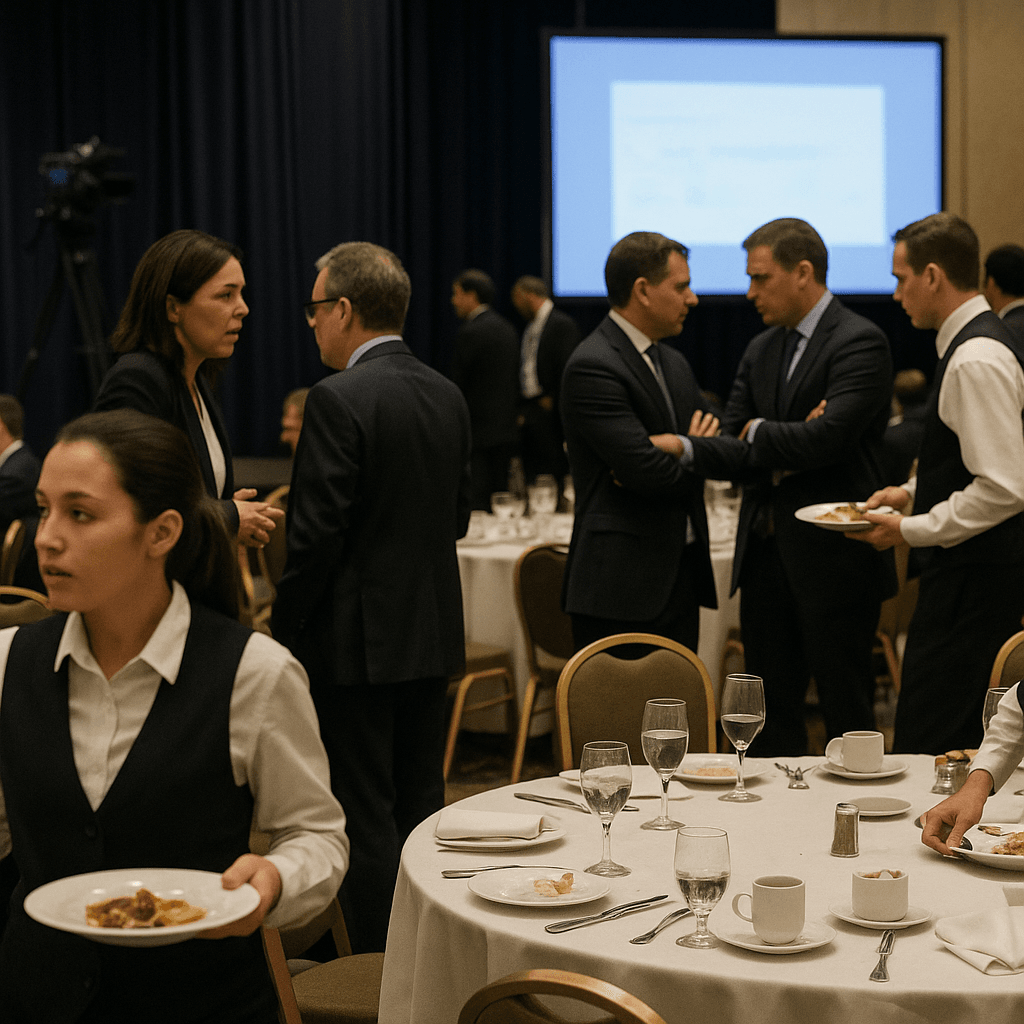
Saturday night’s White House Correspondents Dinner looked less like a polished Washington ritual and more like a stress test for America’s media-political class. The confusion inside the ballroom matters because this event has long served as a symbolic détente between the press, power, and public performance.
The deeper force is institutional distrust. The dinner was built for an era when access journalism, political comedy, and elite consensus could coexist in one room. That compact is breaking down as audiences fragment, politicians bypass traditional outlets, and the press itself faces a credibility fight.
– Winner: Outsider media voices and critics of establishment rituals
– Loser: Legacy political-media pageantry that depends on shared legitimacy
– What changes: The dinner becomes less a unifying civic spectacle and more a contested stage for who gets to define authority
Within the next 12 months, expect the Correspondents Dinner to face a sharper identity choice: either reinvent itself as a harder-edged journalistic institution or slide further into irrelevance as a cultural performance that no longer matches the political moment.
So what does this mean for you? Watch less for the speeches and more for who shows up, who stays away, and how the room reacts. In a fractured media era, attendance itself is becoming a signal of power.
Subscribe for daily intelligence briefs →
—
*AI-assisted content. Reviewed by ShortBulletin Editorial Team. | shortbulletin.com*