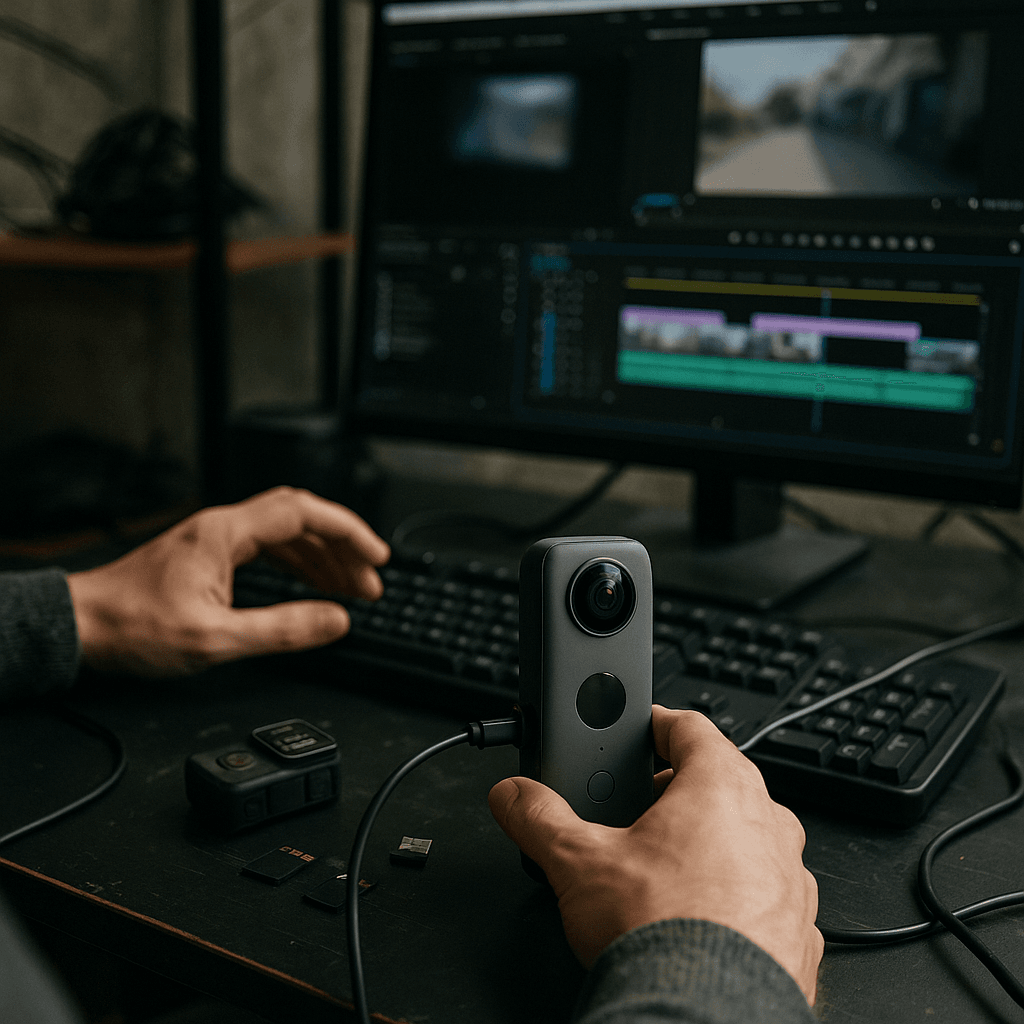
360-degree cameras just picked up a mainstream trick: capturing wide immersive footage, then letting creators reframe it later into standard flat video. That matters because the biggest bottleneck in 360 has never been hardware alone. It has been usability. If users can shoot once and publish everywhere, these cameras stop being niche travel gadgets and start competing with action cams and creator tools.
The deeper shift is software-led convenience. Reframing, subject tracking, and AI-assisted editing are doing the real commercial work here, not just the lenses. The winning product is no longer the one with the most exotic capture format. It is the one that reduces decision-making at the moment of filming and moves it into post-production, where creators can optimise for different platforms.

– Winner: Camera brands that bundle strong editing software with compact hardware
– Loser: Single-purpose action cameras that cannot offer the same framing flexibility
– What changes: 360 capture becomes less about immersive viewing and more about optionality, workflow speed, and creator resale value
By the next product cycle, expect more brands to market 360 devices as “shoot first, choose angle later” systems rather than immersive cameras. The likely result is a category blur: action cam, vlog cam, and 360 cam features will increasingly merge into one creator device stack.
So what does this mean for you? If you make video, the smartest camera may now be the one that gives you editing freedom after the shot, not before it. If you buy tech, watch the software ecosystem as closely as the lens quality, because that is where the long-term advantage is forming.
Subscribe for daily intelligence briefs →
—
*AI-assisted content. Reviewed by ShortBulletin Editorial Team. | shortbulletin.com*